|
|
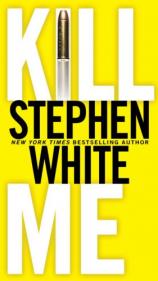
Kill Me
by Stephen White
List Price: $9.99
Pages: 512
Format: Paperback
ISBN: 0451220714
Publisher: Penguin Group (USA)
We've all been there. A loved one or a dear friend becomes desperately ill or is tragically injured. Someone --- maybe even you --- says, "If that ever happens to me, I wish someone would just . . . kill me."
What if you could choose when to die?
But once you decide, you can't change your mind.
Ever.
No matter what.
Welcome to the next step in the evolution of suspense fiction, to an in-your-face/what-would-you-do? topical thriller. Kill Me is a brilliantly conceived roller-coaster ride that zeros in on some of the most contentious issues of our time, the human yearning for connection between the choices we make about our lives and deaths.
top of the page

1. The story opens with the psychologist's point of view then switches to the protagonist's. Why do you think Stephen White made this choice? How does it enhance the suspense?
2. At the beginning of the story, we do not know what the narrator is suffering from. Why does the author choose to keep this a secret?
3. How do you feel about the Death Angels when we first are told about them?
4. How does the main character's flirtation with danger-his obsessions with driving dangerously and skiing dangerously --- seem essential to the story and his pact with the Death Angels?
5. At the beginning of Kill Me, the narrator is not entirely sympathetic. Does this change over the course of the novel?
6. What does Antonio's story have to do with the narrator's story?
7. The skiing accident is essential to the plot. What does it allow Stephen White to introduce?
8. How does the narrator's friend, Jimmy Lee, turn out to be important?
9. The discussion between Jimmy Lee and the narrator provides Stephen White with the perfect opportunity to address questions that the reader might have about the narrator's choice. How does the author make our narrator's decision to be killed by the Death Angels plausible? Is this decision one you can relate to?
10. How has the narrator changed since becoming a businessman?
11. Are the narrator and the psychologist similar?
12. How do the Death Angels entice the narrator into agreeing to a pact with them? What do they use as an inducement?
13. Why does the Death Angel woman bring up Adam? How does the existence of the narrator's son, Adam, affect his decision?
14. How was the narrator different at 23?
15. Is the narrator too trusting?
16. The narrator believes that his quality of life is most important. (There's a certain irony in a man who likes to gamble with his life making sure he has a "safe" death.) Does his understanding of what is important in life change by the end of the novel and how does it change?
17. How are Adam and his father similar/different?
18. How is the knowledge that Adam's stepfather killed himself important? What scene does it echo?
19. Why is the narrator's relationship with his son crucial?
20. Why does the narrator become obsessed with Lizzie?
21. How is the narrator's choice to kill himself different from a "Dr. Kerkovian thing. And it's not a Terry Schiavo thing. I'm talking about something else, about ending my life on my own terms while I'm still well enough to do so, so that I die before I become disabled mentally, or disabled physically, or before I become debilitated by pain…" Do you agree with the narrator's decision?
22. How do you perceive the Death Angels? Does your view of the Death Angels change over the course of Kill Me?
23. Referring to Dimitri, Lizzie says, "He wasn't murdered. He was executed. The difference is significant?" Do you agree?
24. How is Connie, the narrator's brother, important to the story? What alternative does he present?
25. The bargain with the Death Angels initially seems reasonable to the narrator but what changes? What does the narrator realize he is giving up?
26. Why does the author begin his story at the end? What does this allow him to do?
27. What do Lizzie and the narrator have in common?
28. How does the novel end? Does the narrator redeem himself?
29. How is the reader's position privileged?
30. What is the significance of Jimmy Lee's presence at the funeral?
top of the page

"Stephen White has always been a rock solid writer. But this book should turn heads. Big, provocative and down right gripping, this is his best yet."
--- author Michael Connelly
""KILL ME" is that rarest of creations --- a thinking-person's thriller. In this age of the same-old, same-old fiction, White's novel stands dizzyingly above the pack. The concept is unique (and brilliant), the writing is sharp, observant and wry (White's trademark), and every page of this compelling tale is filled with perfectly realized human emotion --- about life, death and family. Superb."
--- author Jeffery Deaver
"White's latest thriller is an outstanding page-turner that examines quality of life, what it means to be living or dying, and who should make that determination. Although series regular psychologist Alan Gregory (MISSING PERSONS) appears, this book centers on Gregory's patient, an anonymous wealthy white man with the lifestyle of a thrill seeker. After a skiing injury that has him questioning his mortality, he signs on with a shadowy insurance group he calls the "Death Angels," who promise to terminate him should his quality of life drop below a certain threshold. As his health status changes more quickly than our hero expects, he's left not only to fight his medical condition but also the group that has promised to fulfill the contract. White takes a promising premise and fleshes it out with well-rounded characters, plenty of action, and far more insight than appears in most such works. While the ending is somewhat predictable, it doesn't detract from a well-above-average thriller. One of White's best, this is strongly recommended"
--- Library Journal, *Starred Review
"Bestseller White (MISSING PERSONS) takes an endlessly debatable question - at what point would a decline in your quality of life cause you to want to end your life? - and leverages it into a clever, absorbing thriller. The anonymous narrator is in his prime, a happily married father of a young girl given to high-risk sports. An assortment of grim fates and a near-escape of his own make him consider the question. A shadowy group called Death Angel Inc. contracts to guarantee that if the life of the "insured" should reach a certain agreed-upon level, they will terminate that life. Fascinated and impressed by the Death Angels' knowledge and reach, he eventually negotiates terms with them. This Faustian bargain doesn't take long to reveal its dark side, and White pays almost equal attention to the philosophical and the physical as his hero has to both approach the conditions that would trigger his contract's death clause yet remain healthy enough to fight back. Some finely scripted action scenes build to a telegraphed ending that weakens the book only slightly."
--- Publishers Weekly
"In this installment of the popular series starring clinical psychologist Dr. Alan Gregory, the setting remains the picturesque Colorado countryside, but White sends Dr. Gregory to the background and instead features one of his patients, an unnamed, happily married businessman with an adventurous streak. After a near-fatal crash during a Canadian skiing expedition, coupled with a friend's accident, our hero begins to question his own mortality and vows never to be a burden to his family. When he gets word of an organization that, for a hefty fee, will end your life should you become "a burden," he rather hastily signs up. But what if you discover you have a slowly ticking time bomb in your head, and while death could come at any moment, it might not be right away? How do you say "not quite yet" to your personal hit men? Can our hero evade the assassins he paid with his own money in time to put his house in order? White unfolds this unusual, twisted story by way of conversations between patient and psychologist (Dr. Gregory); our "anonymous, rich white guy" divulges information at his own manipulative pace, leaving both doctor and reader wondering how this warped account might come together in the end. Bizarre, thrilling, and oh so much fun."
--- Booklist
|
|