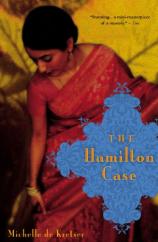
The Hamilton Case: A Novel


About the Book
The Hamilton Case: A Novel




A brilliant novel of identity and culture, in the spirit of Kazuo Ishiguro's The Remains of the Day and Rohinton Mistry's A Fine Balance.
Having come of age on the island nation of Ceylon, Sam Obeysekere is a lawyer whose life is guided by the British culture that dominates his homeland. Educated at Oxford, with a dazzling career in his sights, Sam is more English than the English. Only his flamboyant, unruly mother, exiled to a jungle estate, reminds him of his family's real heritage and a different set of home truths.
Sam's undoing arrives in the form of the Hamilton case, a scandalous murder that shakes the upper echelons of island society. Guided by grandiose visions of Sherlock Holmes, he becomes convinced he can solve the mysterious case--and that his good standing with the English will insulate him from the social unrest the case has exposed.
The case that makes Sam's name also destroys his career, and the precipitous cruelty of his fall is only the first in a series of blows that leave him bewildered. In the end, he grapples with a life that has been "a series of substitutions," the darkest of human tragedies. Michelle de Kretser "has given us the classic whodunit wrapped up in a beautiful and tragic literary novel." --- Vogue (Australia)


The Hamilton Case: A Novel
- Publication Date: April 11, 2005
- Paperback: 320 pages
- Publisher: Back Bay Books
- ISBN-10: 0316010812
- ISBN-13: 9780316010818