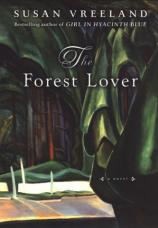
The Forest Lover


Review
The Forest Lover




Susan Vreeland's THE FOREST LOVER is the magnificent story of a woman who has a burning desire to be recognized in her field. The trouble is that she lives in Victoria, British Columbia at the turn of the twentieth century. Females in business are maligned, especially one who would make a living at painting. Emily Carr is such a woman, a woman far ahead of her time.
Vreeland examines the emotional makeup of a woman who goes against the protocol of decency for a well-bred girl in Victoria. She embarrasses her three sisters by her repeated forays into the wilderness north of Vancouver to paint native Indian tribal people and their totems. She is obsessed with the idea of picturing them on canvas to preserve a dying heritage. None are interested in her venture, and her sisters are defiant in their resolve against her work.
Despite their objections, Carr ventures forth into the Canadian wilderness to paint trees, totems and the people she learns to love. Her best friend and soul mate is an Indian mother, Sophie Frank. Sophie is an artist in her own right; she makes baskets to sell in Victoria. A Christian, she uses her proceeds to purchase gravestone markers for her dead children. who have fallen to "white men's diseases."
Carr obtains family trust fund money from her sister Dede to travel to France to study with the great painters of her day. She has become discouraged by her inability to paint the totems with the passion that will tell a tale, and so she studies the works of Van Gogh, Matisse, Modigliani and Picasso, imitating their techniques. However, she is unsatisfied with her results and leaves for home. Carr again will go to the wooded islands and splash color on canvas to leave a totem's legacy for future generations. She fears the poles will be gone to collectors before she can paint them and returns with impassioned frenzy to her first love, the native tribes she adores.
THE FOREST LOVER is Carr's story, though the friends she makes are fictionalized by the author. However, her paintings are placed throughout the book and are real. In addition to Sophie, Carr befriends a French fur trader, Claude, and a crippled misfit, Harold. She has a penchant for the unusual in people as well as in art. She longs to earn recognition as an artist, but the recognition escapes her until late in her career, when she's about to give up. Vreeland has researched Carr's life extensively and paints her own word picture of the struggling artist with compassion. Credits are listed at the end of the book.
I highly recommend THE FOREST LOVER for its educational value as well as for its entertaining story. Carr is a study in obstinacy, persistence and passion. Vreeland should receive kudos for her extensive research and beautifully written story. The New York Times bestselling author of GIRL IN HYACINTH BLUE has produced another fine piece of writing.
Reviewed by Judy Gigstad on February 5, 2004


The Forest Lover
- Publication Date: February 5, 2004
- Genres: Fiction
- Hardcover: 352 pages
- Publisher: Viking Adult
- ISBN-10: 0670032670
- ISBN-13: 9780670032679