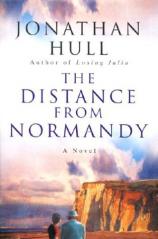
The Distance From Normandy


Review
The Distance From Normandy



THE DISTANCE FROM NORMANDY is the long-awaited sophomore novel from Jonathan Hull, whose debut effort, LOSING JULIA, is one of my favorite books. Once again Hull engages and envelops readers in his story.
As the book opens, Mead, a World War II veteran with harrowing memories of the Battle of Normandy, is living alone in California. He misses his wife, who died of cancer. He copes with the realities of old age, and he spends a lot of the day nostalgic about the past.
His world is rocked one day when his daughter, Sharon, a single mom, calls to inform him that his only grandchild, Andrew, has been booted from school for brandishing a penknife at a bully. Andrew is coping badly with the suicide of his best friend, Matt, and could benefit from some stability in his life in a new place. Mead offers to have his grandson spend three weeks of summer vacation with him. His goal: to get Andrew back in line.
As soon as Andrew arrives, their worlds collide. Mead lives his life with the orderliness of the Army, while Andrew is a typical teen, prone to wearing loose fitting clothes, lying on his bed listening to music and daydreaming about girls. His grandfather cannot relate to Andrew and reflects back on his own youth that was defined by war, comrades who blew up around him and life that was all too real.
Mead and Andrew strike a measured relationship. They test each other endlessly. While there is an essence of caring between them, there is a gap in their rapport that has been bred by physical and emotional distance. Neither is warm; both are hurting. Each is trapped in his own memories --- Andrew of wishing he had been able to save Matt, and Mead of war and an incident in Normandy that haunts him.
One day while rummaging around the house while Mead is out, Andrew finds an old German Luger, which is a souvenir from the war along with some other war momentoes. Shortly after this Andrew gets himself into more trouble and Mead makes a decision to take him to Normandy to show him the world he knew with a goal to sharpen him up about history, and what mattered. This trip to Europe --- and into the past --- brings secrets to the surface for both of them.
While plot and storyline are critical to any book's success, Hull's true skill comes from how he writes character and emotion. His style captivates his readers and immediately draws them into the story. As he did in LOSING JULIA, Hull captures the indignity of growing old. Here he also captures the pressures of being young.
There are many comedic moments as these two generations collide. The first night Mead buys huge steaks for dinner only to learn that his grandson is a vegetarian. Their first trip to the California beach together pairs this aging codger with a penchant for embarassing bathing attire with his grandson who is a slave to his raging hormones and a teen's desire to fit in.
Some of the best dialogue surrounds Andrew's matchmaking attempts to bring his grandfather and Evelyn, the woman across the street, together. Mead is his usual curmudgeony self about this. Andrew is tenacious in his efforts. The story here takes a twist that this reviewer found extraneous, but delivered some imagery that wrapped the book nicely.
I read this book four months before tapping out this review, yet I still find myself smiling as I think about it. It's not LOSING JULIA, but it is a book that I recommend heartily. And as I read the last page, I eagerly looked forward to Hull's next title. Jonathan, get writing!
Reviewed by Carol Fitzgerald on September 15, 2003


The Distance From Normandy
- Publication Date: September 16, 2003
- Genres: Fiction
- Hardcover: 320 pages
- Publisher: St. Martin's Press
- ISBN-10: 0312314116
- ISBN-13: 9780312314118