IndieBound Independent Bookstores

Barnes & Noble


Loading
Reading Group Guide
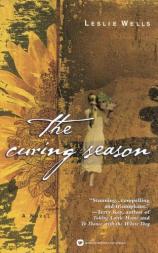
The Curing Season
by Leslie Wells

List Price: $13.95
Pages: 272
Format: Paperback
ISBN: 044667866X
Publisher: Warner Books

Click here to buy this book from Amazon.com.
Click here to buy this book from Amazon.ca.


About This Book


All her life, she prayed that someone would love her. But all she needed was someone to love.

Tobacco country, Virginia, 1948. Book smart and bright, Cora Slaughter has the potential to rise above her hardscrabble existence and her father's alcoholic rages. If only she had the money for college…if only she weren't lame...if only, she dreams, the right man would fall in love with her and take her away. Then Aaron, a handsome drifter, comes around seeking farm work. Eager to please and hungry for affection, Cora falls for him-but soon learns that being with Aaron is nothing like she imagined. As her new life begins, her only joy will be the moments of happiness she snatches with her young son. Then, by a clear creek that marks the border between the black community and the white, she meets an African-American woman and finds a friend. Soon, in a racially divided South, Cora must make a courageous—and dangerous—choice...

In the tradition of Janet Fitch's White Oleander and Dorothy Allison's Bastard Out of Carolina, this is a powerful and riveting novel of hope, despair, and the restorative power of love.

top of the page


rgg_discuss.gif (1294 bytes)


1. In the early part of the novel, Sibby tries to get Cora to be more proactive socially, but to no avail. Yet Sibby obviously enjoys, perhaps even flaunts, her prowess over boys and her social acumen. Did you find Sibby to be a sympathetic character, or did you think she should have been more sensitive to Cora's feelings?

2. The church that Cora grew up in is portrayed as a supportive community, yet the church she joins with Aaron is suspicious and divisive. Did the descriptions successfully portray the range in the nature of the religious groups?

3. The black and white tobacco pickers exhibit a camaraderie while working that is belied by the underlying racial tensions in the community. Discuss how this uneasy truce could have been typical of the times.

4. How did Nita Raines help Cora find the strength to change her situation? Would Cora have found the courage to leave Aaron without Nita's support?

5. Many people question why women stay in violent situations. Was it convincing that Cora tried unsuccessfully to run away from Aaron once, then was afraid to attempt it again? Were her reasons for staying with him credible?

6. Did Cora's seeming passivity elicit your sympathy or your exasperation? Do you believe that her attitude and feeling of worthlessness is typical of abused women?

7. Cora's son, Joshua, is her anchor in life, the one thing she holds on to in the midst of the chaos of living with Aaron. Would Cora have left Aaron earlier if she hadn't had a child, or would she have never left him?

8. How did you feel about Aaron's death at the end of the novel? Were Cora's actions justified?

9. Cora's handicap seems like an insurmountable limitation while she is in rural Virginia, but once she moves to San Francisco, she realizes that in a big city her limp is not very noticeable, and that she can indeed work and be independent. How much of one's perception of oneself is defined by one's milieu and economic circumstances?

10. Is Leslie Wells's most important topic the importance of putting a stop to domestic violence? Is it the role of fiction to encourage the support of worthy causes?

top of the page

Critical Praise

"Leslie Wells traverses rough emotional terrain with remarkable sensitivity....A compelling read; a novel with heart."
—Melinda Haynes, author of Mother of Pearl and Chalktown


"A poignant, powerful testimony to a young woman's indomitable spirit. I was deeply moved. Leslie Wells is a fresh, compelling, soulful new voice."
—April Sinclair, author of Coffee Will Make You Black and I Left My Back Door Open


"The Underground Railroad was a slave enterprise started by slaves to gain freedom. Abused wives and children were also a part of the continuing enterprise. The Curing Season is a station also, reminding us that evil must not find a home in our hearts and minds; evil must be resisted."
—Nikki Giovanni


"Stirs relevant questions...Wells affords a glimpse of Southern geography, not only capturing...post-depression farm life, but also the cadence of the people who inhabit the area."
Daily Texan


"The story is told simply, without sensationalism. It is about redemption and the indomitable spirit of a woman who finally comes to terms with who she is and the possibilities for a new life."
Poisoned Pen


"Graphically portrayed and evokes a view of rural life on a par with The Beans of Egypt, Maine."
Library Journal

 
Facebook Fan Page  Follow us on Twitter


Add Your Guide to ReadingGroupGuides.com!

Bookreporter.com Bets On...: Books We're Betting You'll Love


Privacy Policy | Contact Us | Advertising | About Us

© Copyright 2001-2013, ReadingGroupGuides.com. All rights reserved.
The Book Report, Inc. • 250 West 57th Street • Suite 1228 • New York, NY • 10107
Ph: 212-246-3100 • Fax: 212-246-4640

Bookreporter.comReadingGroupGuides.comGraphicNovelReporter.comFaithfulReader.com
Teenreads.comKidsreads.comAuthorsOnTheWeb.com