IndieBound Independent Bookstores

Barnes & Noble

Loading
Reading Group Guide
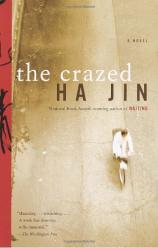
The Crazed
by Ha Jin

List Price: $13.95
Pages: 336
Format: Hardcover/Paperback
ISBN: 0375714111
Publisher: Vintage Books

Click here to buy this book from Amazon.com.
Click here to buy this book from Amazon.ca.


About This Book


Ha Jin's seismically powerful new novel is at once an unblinking look into the bell jar of communist Chinese society and a portrait of the eternal compromises and deceptions of the human state. When the venerable professor Yang, a teacher of literature at a provincial university, has a stroke, his student Jian Wan is assigned to care for him. Since the dutiful Jian plans to marry his mentor's beautiful, icy daughter, the job requires delicacy. Just how much delicacy becomes clear when Yang begins to rave.

Are these just the outpourings of a broken mind, or is Yang speaking the truth—about his family, his colleagues, and his life's work? And will bearing witness to the truth end up breaking poor Jian's heart? Combining warmth and intimacy with an unsparing social vision, The Crazed is Ha Jin's most enthralling book to date.

top of the page


rgg_discuss.gif (1294 bytes)


1. Early on in The Crazed, Weiya chides the narrator, "You're a bit too emotional, perhaps because you're not experienced in life yet" [p. 119]. Do you agree with her? Why did Ha Jin choose Jian as the narrator? What are Jian's strengths and weaknesses as a character and a narrator? How does his lack of objectivity affect your reading? Is his version of the events throughout the course of the novel believable? How does the narrator's sense of self evolve? Is this ultimately a coming-of-age novel?

2. What American notions of China and its particular form of communism are confirmed or challenged in this novel? What do you think Ha Jin is saying about Chinese communism and its effect on the individual and society?

3. What determines/undermines romantic attachments in this novel? Are there any fulfilled and satisfied love relationships in this novel? How do the relationships compare or contrast to those in Waiting, if you've read Ha Jin's earlier novel? What is Ha Jin saying about love, romantic or otherwise?

4. Professor Yang's students dislike studying political science, but he defends it as crucial and invaluable, "Human beings have always lived in some kind of political environment" [p. 199]. Later he pontificates that, "It's personal interests that motivate the individual and therefore generate the dynamics of history" [p. 320]. What do you think of these two statements? Do you agree with Professor Yang?

5. "What's the good of poetry? It just gets your hopes up" [p. 136]. According to Professor Yang, what is the fundamental difference between Western and Chinese poetry? What is the significance of the Tu Fu poem, "Song of My Straw Hut Shattered by the Autumn Wind" [p. 132], that Yang quotes as his own ?

6. Ha Jin gives us minute details of everyday life in Shanning town—the sight of billboards promoting "Aim High, Go All Out" and of laundry on balconies flapping in the wind, the taste of simmering tofu and pomegranate tea, and the smell of stewed radishes. Why all these details? Is this Ha Jin's narrative style or is he detailing ordinary life in China for his Western audience?

7. The natural landscape is absent from The Crazed until Jian leaves Shanning for the countryside. How do the descriptions of the countryside and its inhabitants compare to views in famous Chinese movies such as Yellow Earth and Ju Dou, if you've seen any of these? What are the symbolic differences between the town and the countryside, and later the capital, Beijing? What is the importance of each place and its role in the context of the entire novel?

8. What is the significance of Chinese custom officials confiscating the Bible? And of the Genesis story retold by Professor Yang? Why does Ha Jin introduce this in the beginning of the novel?

9. Animal imagery permeates the first half of the book. What do the animals signify? Why do most of the characters resemble animals? Professor Yang is likened to a piglet, a fish, a harnessed horse, and a rabbit; Yang's wife to a praying mantis; the nurse to a chicken; the crazy cafeteria man to an owl. Is this connected somehow to the Genesis story?

10. What does Jian learn from traveling to and around Beijing, and from experiencing the historical events of Tiananmen Square in June 1989? How does it affect his life, and the story?

11. What do you think of Professor Yang's ranting and raving? Do you think he is talking to Jian in particular or to anyone who will listen? Is this a manifestation of his illness or is Yang yelling out the truth from his sickbed?

12. In what ways is this novel about power relationships—between teacher and student, ordinary students and Party member students, teacher and department head, older students and younger students, boyfriend and girlfriend, husband and wife, the individual and the bureaucratic system? In what ways does the Communist Party bureaucracy affect the various relationships in the novel? How do these relationships change over the course of the spring, as the professor lays dying? Does any one group or individual emerge victorious over another? Are there any betrayals in the novel? Who betrays whom?

13. Who or what is the crazed? What does the title refer to? What does it imply?

top of the page

Critical Praise

"Ha Jin takes the lead of ordinary life and turns it into gold. . . . Haunting . . . wrenching. . . . A work that deserves to be immortal."
The Washington Post


"Ha Jin's empathy for his characters is matched by his unwillingness to give them a break. Reading him is almost like falling in love: you experience anxiety, profound self-consciousness, and an uncomfortable sensitivity to the world—and somehow it's a pleasure. . . . Like the best realist writers, Ha Jin sneaks emotional power into the plainest declarative sentences."
The New Yorker


"A work of enormous intelligence. Piercing, critical, but leavened by Jin's understated prose, The Crazed is a substantial addition to the corpus of a great author."
San Francisco Chronicle


"A work of literature, in the highest tradition of Anton Chekhov or Yasunari Kawabata, suffused with an aching purity."
Houston Chronicle

 
Facebook Fan Page  Follow us on Twitter


Add Your Guide to ReadingGroupGuides.com!

Bookreporter.com Bets On...: Books We're Betting You'll Love


Privacy Policy | Contact Us | Advertising | About Us

© Copyright 2001-2012, ReadingGroupGuides.com. All rights reserved.
The Book Report, Inc. • 250 West 57th Street • Suite 1228 • New York, NY • 10107
Ph: 212-246-3100 • Fax: 212-246-4640

Bookreporter.comReadingGroupGuides.comGraphicNovelReporter.comFaithfulReader.com
Teenreads.comKidsreads.comAuthorsOnTheWeb.com