IndieBound Independent Bookstores

Barnes & Noble


Loading
Reading Group Guide
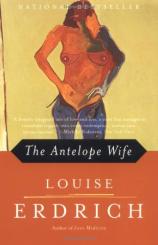
The Antelope Wife
by Louise Erdrich

List Price: $14.99
Pages: 320
Format: Paperback
ISBN: 9780061767968
Publisher: Harper Perennial

Click here to buy this book from Amazon.com.
Click here to buy this book from Amazon.ca.


About This Book


The Antelope Wife extends the branches of the families who populate Louise Erdrich's earlier novels, and once again, her unsentimental, unsparing writing captures the Native American sense of despair, magic, and humor. Rooted in myth and set in contemporary Minneapolis, this poetic and haunting story spans a century, at the center of which is a mysterious and graceful woman known as the Antelope Wife. Elusive, silent, and bearing a mystical link to nature, she embodies a complicated quest for love and survival that impacts lives in unpredictable ways. Her tale is an unpredictable ways. Her tale is an unforgettable tapestry of ancestry, fate, harrowing tragedy, and redemption, that seems at once modern and eternal.

top of the page


rgg_discuss.gif (1294 bytes)


1. How is Scranton Roy able to suckle a baby? What does his ability to do so suggest about Erdrich's view of gender roles? How is Scranton's act different from Blue Prairie Woman's suckling of a puppy? Is Scranton's ability to lactate meant to be a realistic or a magical act? Are the male characters in this novel realistically portrayed, or are they, as one scholar has suggested, merely pasteboard cutout figures?

2. Does Erdrich give us enough information that we can reconstruct Cally's family tree sufficiently that we can see why she says, on page 110, "I am a Roy, a Whiteheart Beads, a Shawano by way of the Roy and Shawano proximity"? Can we trace her back to Scranton Roy? To Blue Prairie Woman? To Josephette and Mary Shawano?

3. What is the effect of having Almost Soup narrate two of the chapters? Why, for example, does Erdrich have this dog in Chapter 9 tell the story of Cally's near-death? How would the story be different if Cally's mother Rozin had narrated that chapter? Is the dog narration part of a larger pattern of erasing the sharp boundaries between humans and other species? What do you make of the last sentence on page 73, that humans are "no more and no less important than the deer"?

4. You will notice that Sweetheart Calico says almost nothing in the entire text. Why is that? When she finally does say something, what does she say, and why that? Why does Erdrich make her the "antelope wife"?

5. Why do we have several sets of twins in the novel? What difference would it have made if all of those twins had been single births?

6. Interspersed throughout the novel are several phrases and sentences in other languages, particularly German and Ojibwa. Do they contribute in some way to the story?

7. Several motifs and images are repeated: broken teeth, cloth, sewing and beads, food and cooking, etc. Choose one and explain why Erdrich used it in The Antelope Wife.

8. What is the point of the blitzkuchen story? What seems to be the secret ingredient that Frank has been searching for?

9. On page 115, humor is said to be "an Indian's seventh sense." Is The Antelope Wife a humorous novel? Does it suggest in less direct ways that we should never take life so seriously that we forget to laugh? Why does Erdrich give us the humor of Chapter 7 (the story of Almost Soup's escape from the stew pot) immediately after the devastating story of Deanna's asphyxiation in Chapter 6?

10. On page 174, an unnamed uncle at the "Kamikaze wedding" states "We all got to suffer. That's love." Although he is speaking specifically to Richard, Cally's rejected father, is this statement meant more generally?

11. Erdrich could have written a simple novel. Why do you think she make it so complex? Is anything gained by having represented so many generations, races, tribes, species in one novel?

12. The Antelope Wife contains many references to the "pattern" made with the "beads." What larger patterns gradually emerge as the many lives and stories in the novel unfold and intertwine? On page 200, Cally says "Family stories repeat themselves in patterns and waves generation to generation, across bloods and time. Once the pattern is set we go on replicating it." What pattern or patterns are set and replicated? Does the novel suggest, fatalistically, that we can never break the patterns our past has set for us?

top of the page

Critical Praise

"A fiercely imagined tale of love and loss, a story that manages to transform tragedy into comic redemption, sorrow into heroic survival."
— Michiko Kakutani, New York Times


"[A] beguiling family saga. . . . A captivating jigsaw puzzle of longing and loss whose pieces form an unforgettable image of contemporary Native American life."
People


"Richly cadenced, deeply textured, Erdrich’s writing has the luster and sheen of poetry, each sentence circling deeper into emotion, motivation, and rationale, until love touches not eternity but death, transforming The Antelope Wife into a story of longing and of longing assuaged."
Los Angeles Times


"[An] extraordinary new offering of history, lore, obsession, lose, and love. Beautifully, extravagantly, in narrative fragments that mix metaphor and story, Erdrich creates a seemingly haphazard, totally absorbing series of oblique snapshots of these characters."
New York Daily News


"Elegant and spare. . . . In Erdrich’s literary universe, the border between dream and reality is as sheer as the seventh veil. The Antelope Wife is exhilarating, so rich that you’ll want to read it in small pieces, like savoring an exceptionally dense dessert. But it may be hard to pause between the lines."
The Denver Post


"Erdrich manages to find a rich vein of unique and captivating images in the mostly stripped-out mine of magic realism."
New York Post


"Erdrich’s writing is characteristically fluid and sometimes fierce as it etches her characters’ pain and loss. But she lightens the darkness of her story with humor, burnishes it with compassion. She stitches lives and legends into an intricate design both strange and wondrous."
The Orlando Sentinel


"Extraordinary new offering of history, lore, obsession, loss, and love. Beautifully, extravagantly, in narrative fragments that mix metaphor and story, Erdrich creates a seemingly haphazard, totally absorbing series of oblique snapshots of ‘the colliding histories and destinies’ of these characters. The writing is lyrical yet self-mocking, shifting from broad comedy to horror and back again. The operative metaphor is beading: small particles string together to create decorative designs the link generations, cultures, colors."
San Francisco Chronicle

 
Facebook Fan Page  Follow us on Twitter


Add Your Guide to ReadingGroupGuides.com!

Bookreporter.com Bets On...: Books We're Betting You'll Love


Privacy Policy | Contact Us | Advertising | About Us

© Copyright 2001-2013, ReadingGroupGuides.com. All rights reserved.
The Book Report, Inc. • 250 West 57th Street • Suite 1228 • New York, NY • 10107
Ph: 212-246-3100 • Fax: 212-246-4640

Bookreporter.comReadingGroupGuides.comGraphicNovelReporter.comFaithfulReader.com
Teenreads.comKidsreads.comAuthorsOnTheWeb.com