IndieBound Independent Bookstores BRC Facebook Fan Page
Coming Soon
Reading Group Guide
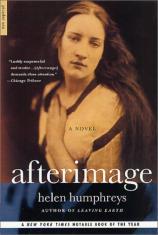
Afterimage
by Helen Humphreys

List Price: $13.00
Pages: 256
Format: Paperback
ISBN: 0312420641
Publisher: Picador USA

Click here to buy this book from Amazon.com.
Click here to buy this book from Amazon.ca.


About This Book


This sparse, intense, gorgeously written novel is inspired by the life and work of the Victorian photographer Julia Margaret Cameron. Though not a fictionalized biography, Afterimage is indeed a sensitive, subtly moving historical novel: a story of big ideas, strong passions, aesthetic impulses, and personal secrets. Our heroine is Annie Phelan--young, beautiful, Irish, and naturally but modestly articulate and intelligent--who is the new housemaid at the English country manor of Eldon and Isabelle Dashell. Isabelle, the Cameron figure, comes to regard the common but captivating Annie as not only a friend but a muse, the all-important inspiration for Isabelle's newly imagined photographic artworks. Indeed, Isabelle is physically and emotionally drawn to Annie-compelled to learn from the young maid and confess secrets to her-just as is Eldon, Isabelle's husband, a would-be adventurer who finds in Annie a confidante who shares his dreams of exploring the ends of the earth. Trapped between the two, Annie is in danger of losing her own identity, her own needs and goals. But when disaster suddenly strikes the Dashell estate, Annie asserts herself-and asserts her freedom and brilliance-as only she could.

top of the page


rgg_discuss.gif (1294 bytes)


1. This novel begins with two epigraphs. Reread them, then explain how they relate to the plot and/or the meaning of Afterimage. Why do you think author Helen Humphreys selected these two particular introductory quotations?

2. Explain the book's chapter titles. Were you familiar with the photography with Julia Margaret Cameron before reading this novel? If so, how did these photographs influence your understanding of the book? If not, how do you suppose they might have? Also, at what specific point in the narrative did you realize that Annie would be not only Isabelle's ally but her muse? And what led you to realize this? Discuss how the theme of wanton creativity is presented by Humphreys. What does this author seem to consider the ultimate source(s) of inspiration?

3. When Annie first arrives at the Dashell manor, another maid abruptly informs her that "there are no prayers here." This troubles Annie; she hides her Bible under her pillow. But by the end of the story, she is posing for Isabelle as the Divine Madonna and asking herself such questions as "Do I still love the Lord?" and "What is gratitude? What is love?" Discuss Annie's religious struggles over the course of the narrative, especially as they pertain to her increasing awareness of art, literature, and so forth. How does Annie surmount these religious struggles? Or doesn't she?

4. Victorian England was, of course, an era of stifling sexual repression. How is this repression apparent in Afterimage? Point out a few telling situations. How does this repressive mood or mindset help to shape the course of the narrative? Also, identify the characters involved in this novel's love triangle-who are they, and why are they attracted to one another? How is their three-way conflict finally resolved? Or isn't it?

5. Why does Annie often dream of a road, a mysteries "road that leads nowhere"-and that she has never actually seen? Where is this road, how and why it is connected to Annie's psyche, and does it even exist? Also, how does Annie's scant knowledge of her own past affect her behavior over the course of the story?

6. During one of Eldon's earliest encounters with Annie, we read: "Eldon looks at the patrons of the public house, the workingmen. What he wishes at this moment is that he were one of them, not that Annie was well born like himself but that he was her equal." Explain both the context and broader relevance of this passage. What other thoughts and emotions about socio-economic class-or "peerage"-did you encounter in this novel? Consider certain conversations on this topic between Annie and Tess, Eldon and Robert Hill, and so forth. To what extent is Afterimage a critique of the Victorian class system, and to what extent is the novel a celebration of it?

7. As historical and intellectual as it is aesthetic and visceral, Afterimage has much to teach us about the then-emerging technologies of photography and cartography, which both combine elements of art and science for purposes of representation and preservation. But neither of these technologies is praised unanimously, of course. Explain Robert Hill's severe criticism of photography at Isabelle's dinner party, and Eldon's adamant rejection (much earlier in the book) of Dunstan's theme maps. Can you defend the negative positions being taken in these two cases, or at least summarize the logic behind them?

8. About midway through the novel, Annie and two other female servants are role-playing in the kitchen, pretending to be "real ladies" instead of maids and cooks. Later, when Isabelle is crying after a fierce quarrel with Eldon, she thus confides in Annie: "Everything would be easier if I were you." And finally, before posing as the Divine Madonna, Annie thinks: "Perhaps [I] could be the mother of the Lord. Perhaps part of faith is being able to become what you believe in." A major concept in Afterimage, then, is the idea of being or becoming someone other than oneself. Point out other scenes where this sort of self-transference is imagined, or even hoped for, and then address the relation of such scenes to this larger theme of identity.

9. Just before the fateful fire starts, Annie privately inspects Isabelle's camera, looking through the lens and thinking about the nature of photography: "It is a small enough world, thinks Annie, that is can be easily controlled. That is something to want." Shortly thereafter-during the novel's swirling, frightening climax-Annie saves the life of young Gus, and next decides to leave the Dashell residence. How does she arrive at this decision, and how (if at all) has it been foreshadowed by her other, earlier actions of heroism and independence? Discuss the manner in which the story of Afterimage equates becoming an artist with becoming a complete person.

10. After Eldon's funeral, Annie goes to his desk to fetch a written note. What is this note, who wrote it, and what does Annie amend to it at the end of the novel? Comment on Eldon and Annie's mutual fondness for tales of exploration and adventure. Why are they both so fond of such accounts, and how do they regard these tales metaphorically? What does it mean, as we read in the book's final pages, that Annie "had been a good member of the expedition?" Finally, how does this great esteem for-and belief in-Arctic expedition diaries end up changing the very lives of Annie and Eldon?

top of the page

Critical Praise

"Every phrase is succinct, every sentence perfectly balanced . . . So beautifully written, the novel leaves its own lasting image in the mind."
The Times (London)


"Lushly suspenseful and tender . . . [Afterimage] demands close attention."
Donna Seaman, Chicago Tribune


"This beautifully written novel edges toward saying something profound about the relationships between art and life, men and women, the powerful and the disempowered."
The Economist


"Humphreys has an impeccable command of imagery, and her prose finds strengths in its subtlety . . . [A] finely wrought novel."
Publishers Weekly


"Accomplished . . . Humphreys delves boldly into the tumultuous Victorian era, brining to life an aristocratic couple ravaged by the intensity of their aesthetic obsessions."
John Freeman, The Washington Post Book World


"Delicate and incandescent . . . [Humphreys's] descriptions bristle with nuance, and scenes are pared down to their bare essence."
Sarah Coleman, San Francisco Chronicle


Privacy Policy | Contact Us | Advertising | About Us

© Copyright 2001-2010, ReadingGroupGuides.com. All rights reserved.
The Book Report, Inc. • 250 West 57th Street • Suite 1228 • New York, NY • 10107
Ph: 212-246-3100 • Fax: 212-246-4640

Bookreporter.comReadingGroupGuides.comGraphicNovelReporter.comFaithfulReader.com
Teenreads.comKidsreads.comAuthorsOnTheWeb.comAuthorYellowPages.com