Reading Group Guide
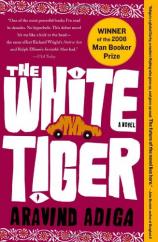
The White Tiger
by Aravind Adiga

List Price: $14.00
Pages: 276
Format: Paperback
ISBN: 9781416562603
Publisher: Simon & Schuster

Click here to buy this book from Amazon.com.
Click here to buy this book from Amazon.ca.


About This Book


English-language Asian writers have adopted all manner of styles in the last three decades -- Raj nostalgia, magic realism, Zola-like fatalism ­- in their attempts to encapsulate India. What makes this much trumpeted debut novel by Aravind Adiga such a triumph is the strikingly contemporary voice with which it skewers its subject: a beguiling mix of pitch-black humor and devastating cynicism that feels both refreshingly modern and bracingly direct. As India rushes with careless abandon towards its longed-for status as an economic superpower, and as the gap between rich and poor grows ever wider, the country has found in Adiga an acerbic commentator more than capable of chronicling its often grotesque inequalities.

top of the page


rgg_discuss.gif (1294 bytes)


1. The author chose to tell the story from the provocative point of view of an exceedingly charming, egotistical admitted murderer. Do Balram's ambition and charisma make his vision clearer? More vivid? Did he win you over?

2. Why does Balram choose to address the Premier? What motivates him to tell his story? What similarities does he see between himself and the Premier?

3. Because of his lack of education, Ashok calls Balram "half-baked." What does he mean by this? How does Balram go about educating himself? What does he learn?

4. Balram variously describes himself as "a man of action and change," "a thinking man," "an entrepreneur," "a man who sees tomorrow," and a "murderer." Is any one of these labels the most fitting, or is he too complex for only one? How would you describe him?

5. Balram blames the culture of servitude in India for the stark contrasts between the Light and the Darkness and the antiquated mind set that slows change. Discuss his rooster coop analogy and the role of religion, the political system, and family life in perpetuating this culture. What do you make of the couplet Balram repeats to himself: "I was looking for the key for years / but the door was always open"?

6. Discuss Balram's opinion of his master and how it and their relationship evolve. Balram says "where my genuine concern for him ended and where my self-interest began, I could not tell" (160). Where do you think his self-interest begins?

7. Compare Ashok and his family's actions after Pinky Madam hits a child to Balram's response when his driver does. Were you surprised at the actions of either? How does Ashok and his family's morality compare to Balram's in respect to the accidents, and to other circumstances?

8. Discuss Balram's reasons for the murder: fulfilling his father's wish that his son "live like a man," taking back what Ashok had stolen from him, and breaking out of the rooster coop, among them. Which ring true to you and which do not? Did you feel Balram was justified in killing Ashok? Discuss the paradox inherent in the fact that in order to live fully as a man, Balram took a man's life.

9. Balram's thoughts of his family initially hold him back from killing Ashok. What changes his mind? Why do you think he goes back to retrieve Dharam at the end of the novel? Does his decision absolve him in any way?

10. The novel offers a window into the rapidly changing economic situation in India. What do we learn about entrepreneurship and Balram's definition of it?

11. The novel reveals an India that is as unforgiving as it is promising. Do you think of the novel, ultimately, as a cautionary tale or a hopeful one?

top of the page

 
Back to top.   


Privacy Policy | Contact Us | Advertising | About Us

© Copyright 2001-2008, ReadingGroupGuides.com. All rights reserved.