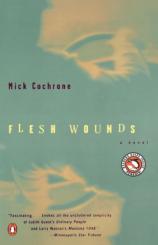
Flesh Wounds


About the Book
Flesh Wounds



Flesh Wounds, Mick Cochrane's lucid portrait of an American family caught in crisis, begins from the point of view of Hal Lamm, a salesman who is being arrested for the molestation of his thirteen-year-old granddaughter Becky. But what begins as Hal's story becomes that of his wife, his children, and his grandchildren -- the people who have most suffered the consequences of his actions, and the ones forced to come to terms with their knowledge. By the end of the book, in fact, Hal seems to have all but faded from view, not just for the reader, but for his family, most of whom have come to make peace with their conflicted feelings toward him.
More than a story about incest though, Flesh Wounds is largely a book about family relations, and the tangled, tender, painful, ambivalent nature of our feelings toward those who have both loved us the most and hurt us the most. How, for instance, can Hal's grown-up daughter Ellie -- also a victim of Hal's sexual abuse -- find a way not only to forgive an emotionally absent mother who turned a blind eye to her husband's misdeeds, but ultimately to forge a warm and loving relationship with her? How can his grown son Cal begin to connect with his anger toward his father -- enough to physically assault the aging, defenseless Hal -- only after the birth of his daughter? And how do different members of the family respond to such a resounding crisis, especially when it will force them either to reshape the way they feel about themselves and those related to them, or to reject the notion so vehemently -- as Maureen and Geoff do -- that they must constantly ward off reality in order to keep their beliefs intact.
Like a handful of other brave and brilliant novels, such as Ordinary People and A Thousand Acres, Flesh Wounds shatters the myth of the perfect family -- the glossy apple-pie image many people aspire to -- to get beneath the surface and expose the messy, scattered complexities that are at the heart of each family. Cochrane reveals not only the often devastating acts that take place behind closed doors, but also the astounding tools of the human psyche: to deny an unmistakable reality if it serves our purposes; to protect ourselves from pain, even if it means causing more pain for others; and, as only a courageous few will do, to look the truth unflinchingly in the eye while others must look away.


Flesh Wounds
- Publication Date: February 1, 1999
- Mass Market Paperback: 288 pages
- Publisher: Penguin (Non-Classics)
- ISBN-10: 0140277226
- ISBN-13: 9780140277227