IndieBound Independent Bookstores

Barnes & Noble

Loading
Reading Group Guide
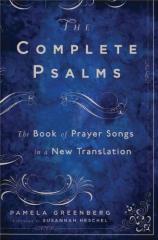
The Complete Psalms
The Book of Prayer Songs in a New Translation
by Pamela Greenberg

List Price: $26.00
Pages: 352
Format: Hardcover
ISBN: 9781608191208
Publisher: Bloomsbury USA

Click here to buy this book from Amazon.com.
Click here to buy this book from Amazon.ca.


About This Book

The Book of Psalms comes to life in this new translation by poet Pamela Greenberg. Restoring the musicality and immediacy of the original Hebrew, the raw emotions of the psalms --- from jubilant gratitude and wonder to mortal terror and quiet despair --- are newly tangible in every line. Greenberg’s translation restores the unflinching realism of the psalms, as the psalmist or psalmists tremble in fear of real enemies, both outside their doors and within their hearts. God becomes at once the greatest source of hope and a source of unspeakable anger, as flawed men and women navigate the difficult questions of faith and doubt. The world of the psalms is full of pitfalls, frustrations, and danger --- but also full of song, bliss, and the hope for peace. It is a world that despite some of the outward differences truly resonates with today’s readers. Read an excerpt here.

top of the page


rgg_discuss.gif (1294 bytes)

1. In her foreword to The Complete Psalms, Susannah Heschel writes, “The psalms appeal to all people, regardless of religious commitments, because they strive to give voice to the human soul.” In what ways do the psalms transcend religious divisions? What are some of the universal qualities of the psalms?

2. In her introduction, Pamela Greenberg reveals that when she first approached the psalms, “I was new to religious life, having landed there through sheer desperation, and found within the psalms a model for talking to God.” (xv) What “model” of spiritual communication can be found within the psalms? How is this model of communication similar to traditional prayer, and how is it different?

3. Greenberg writes, “One of the most significant difficulties I encountered in translating had to do with the use of gender in the psalms, both in reference to God and in reference to the anonymous representative of humanity.” How effective is Greenberg’s effort to make the psalms “speak equally to either gender?” (xxi) Do the psalms feel relevant to both genders today? Why or why not?

4. Traditionally, the psalms have been chanted, sung, and sometimes accompanied by musical instruments. How does the experience of reading the psalms on the page differ from hearing them aloud? What is the effect of thinking of the psalms as music? Does the musical nature of the psalms come through in writing? Why or why not?

5. Many of the psalms are attributed to David, Asaf, or Solomon, yet according to biblical tradition they are all written by David. What difference does it make to think of them as written by one author or several?

6. Greenberg leaves untranslated two words from Hebrew: “Selah” and “Halleluyah.” What is the effect of reading these words in their original form within the psalms? What emphasis and emotions do these words convey? What English words might have a similar effect?

7. Enemies abound in the psalms, from Egyptians and Babylonians in hot pursuit to lions and snakes that lie in wait. What else might these enemies symbolize?  Which dangers are external and which exist within the supplicant’s own mind?

8. Several psalms open with a question, such as Psalms 2, 15, and 74. Consider the role of questioning within these and other psalms. Does each psalm answer the opening question by the end? Do the authors seek answers, or do they accept the unanswerable? Explain.

9. Compare Greenberg’s translation of Psalm 23 to the King James Version in the Bible, which is often quoted and interpreted. How do the subtle differences in translation shift the tone and meaning of Psalm 23? In particular, consider how Greenberg clarifies and updates the King James line, “Yea, though I walk through the valley of the shadow of death, / I will fear no evil; for thou art with me.”

10. Psalm 38 provides an example of God’s anger and punishment. How does this representation of God resonate with Christian and Jewish practice today? Does this angry, vengeful God feel compatible with current theology? Why or why not? How else might we interpret this imagery of a violent God?

11. Many psalms are written in the first person “I.” (See Psalms 30, 31, 55, and 130 for some examples.) What is the effect of this singular, personal narration? Does this “I” make the psalms feel intimate, universal, or lonely?

12. Discuss the imagery within Psalm 88. How does the figurative language serve to express despair, sorrow, and abandonment? What is the message of a psalm that lacks a hopeful tone? In what way is that an expression of faith?

13. Compare the shortest psalm, 117, to the longest psalm, 119. What is the effect of brevity and length within these psalms, and which do you find more powerful?

14. Consider the intergenerational messages of the psalms, “that which our ancestors were instructed / to convey to their offspring, / so that future generations would understand, / those still unborn.” (166) What lessons and practices do the psalms convey to future generations? How do the psalms instruct us to impart these lessons to the next generations? What does continuity from one generation to the next represent?

15. Psalm 150, the final verse, ends with the lines, “Let everything that breathes praise God. / Shine forth your praises on God!” (319) What are some of the many ways to praise God according to this psalm? What new methods of praising God are evident in the psalms?

16. Greenberg provides a Selected Glossary at the end of the book, explaining some of the word choices within her translation. Which of these words seems to alter the tone of the psalms the most? For example, does translating “awe of God” as “wonder or reverence” instead of “fear” significantly affect how the psalms sound and feel? Explain.

top of the page

Critical Praise

"Greenberg's version speaks with a directness and simplicity that distinguishes it from the magniloquence of most other versions…A clear and moving…translation of the Psalms for modern readers."
Library Journal


"[Greenberg’s] authentic engagement with these poems of universal human experience comes through in her translation…[her] knowledge of the original language of the psalms and their stylistic characteristics keeps the book from becoming simply a meditation about, or reaction to, any existing version in English…[Readers] should welcome this poetic translation as not only the work of a modern poet but also fresh commentary on one of the best-loved books of the Bible."
PublishersWeekly.com


"Pamela Greenberg’s delicious new translation of the psalms…has lifted the old language from spider webs and mothballs, breathing new air into the songs."
— Mary Karr, author of Lit and The Liar’s Club

 
Facebook Fan Page  Follow us on Twitter


Add Your Guide to ReadingGroupGuides.com!

Bookreporter.com Bets On...: Books We're Betting You'll Love


Privacy Policy | Contact Us | Advertising | About Us

© Copyright 2001-2012, ReadingGroupGuides.com. All rights reserved.
The Book Report, Inc. • 250 West 57th Street • Suite 1228 • New York, NY • 10107
Ph: 212-246-3100 • Fax: 212-246-4640

Bookreporter.comReadingGroupGuides.comGraphicNovelReporter.comFaithfulReader.com
Teenreads.comKidsreads.comAuthorsOnTheWeb.com