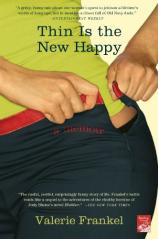
Thin is the New Happy
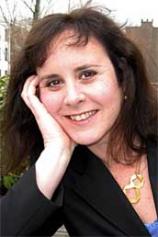
by Valerie Frankel
List Price: $14.99
Pages: 272
Format: Paperback
ISBN: 9780312373931
Publisher: St. Martin's Griffin
Thin Is The New Happy is the perfect book for anyone who loves feel-good, relatable memoirs like Eat, Pray, Love. Valerie Frankel has enjoyed her share of professional success: she’s a prolific novelist and is well-known in the magazine world, but she has also endured years of cabbage soup, lemon juice, and other exercises in self-loathe to try and lose weight.
Not wanting to pass this legacy onto her daughters, she made the decision to stop dieting once and for all. Thin Is The New Happy is her real life story of soul-searching and self-discovery --- of how when you unburden yourself of the emotional baggage of bad body image, the excess weight will dissolve too. Since making her decision, she’s lost twenty pounds and two dress sizes. She looks smoking hot, but more than that, loves her body and herself more than she ever did when she was on a diet.
top of the page

1. A show of hands: Is anyone on a diet right now? Who has been on a diet during the past year? What kind of success have you had trying to lose weight?
2. Valerie Frankel begins her book by sharing a series of dieting metaphors. A drug addiction. A gambling addiction. The five stages of grief. Do you have any of your own you’d like to add?
3. Did you find the author’s tales of chronic dieting humorous or sad? Empowering or self-defeating? Discuss the issues of beauty, body image, and self-acceptance that are raised in Thin Is the New Happy. Does the book cover these issues in a unique way? How are they typically discussed --- and portrayed --- in mainstream American culture?
4. Valerie decided to tackle her dieting obsession once and for all around the time her daughters were reaching puberty. In what ways do you think Valerie’s attitudes about her own body changed once she became a mother? Do you think weight is a different issue for children than it is for adults? How?
5. In her postscript, the author mentions that her mother, Judy, never read Thin Is the New Happy. Judy’s friends did, however --- and were outraged on her behalf. What do you think of Valerie’s portrayal of Judy in this memoir? Was it fair and balanced? Did Judy emerge as a sympathetic character . . . or a bad mother? And what do you think of Judy now?
6. “I am a connoisseur of insult and criticism,” writes the author. “My ears prick up to catch the slightest intonations, the smallest hint of negativity, even in a seemingly benign comment.” Another show of hands: Who in the group can recall at least one episode of childhood taunting? (Some of you may want to share your stories.) How can “innocent” teasing have a lifelong effect on one’s sense of self?
7. Take a moment to talk about the men, past and present, in Valerie’s life. How did they view her? Were they able to see her for who she is on the inside? Also, how did you react when her husband told her: “I adore every inch of your body. And it’d be even better if you could get rid of the stomach.” In what ways did this one remark unleash a lifetime of bad feelings Valerie had about her weight? How would you feel in her shoes --- or his?
8. After reading the author Q&A in this Reading Group Gold guide, do you agree with Stacy London that bad body image is a symptom, not a disease? Which was it for Valerie? Why?
9. Valerie decided that, with this book, she would finally tell the “naked truth” about her weight obsession. With this in mind, have a look at one of Valerie’s nude Self magazine photographs. What do you think, now that you’ve seen it? Does it make you think any differently about the author’s journey? How?
top of the page